

mal
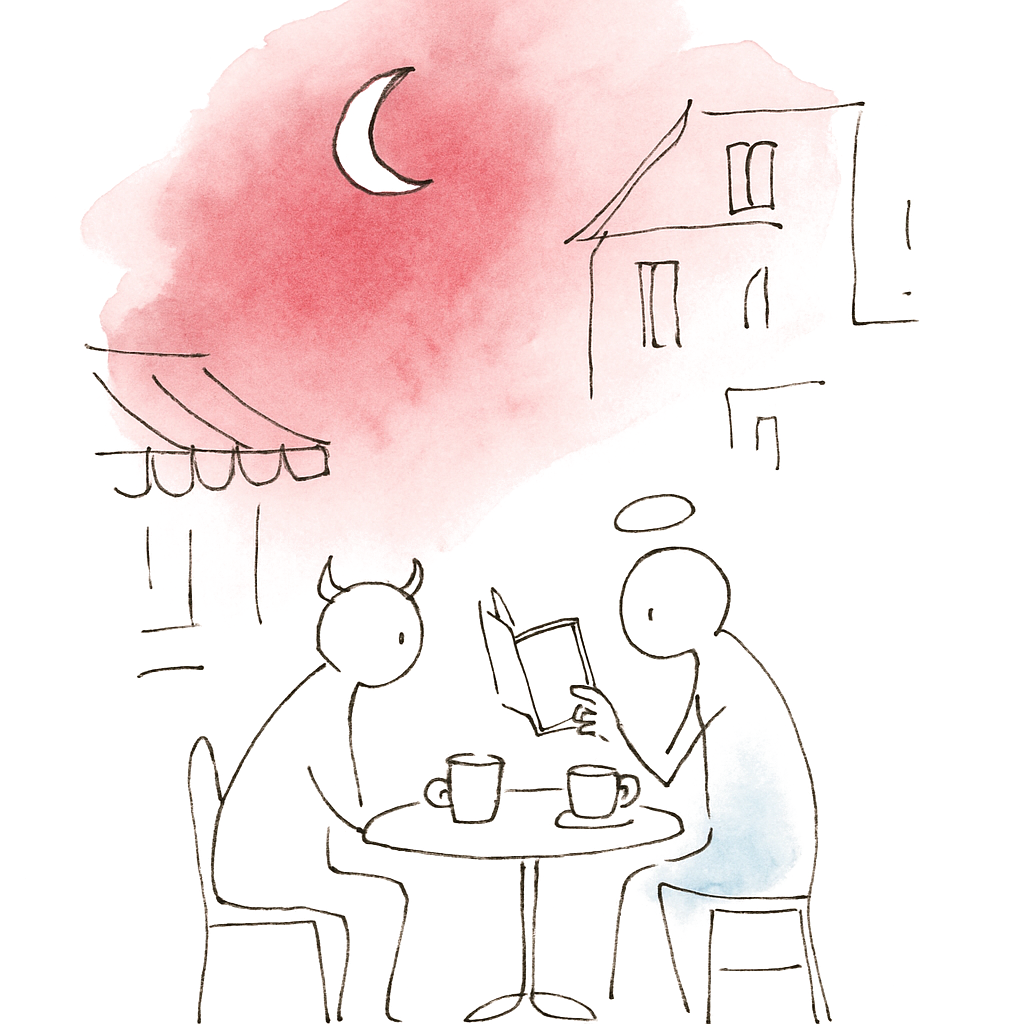
Mal wears three hats in French. As an adverb it means 'badly' (je dors mal — I sleep badly). As a noun it means pain or trouble (j'ai mal à la tête — my head hurts). And in its grandest use, le mal is 'evil' itself — the opposite of le bien, good.
Where you'll hear it
Paul
Margot, penses-tu que les gens sont naturellement bons ?
M, do you think people are naturally good?
Margot
C'est une question très philosophique. Mais nous sommes français ! Nous devrions avoir des opinions fortes sur ce genre de choses.
That's a very philosophical question. But we're French! We should have strong opinions about things like that.
Paul
Peut-être que nous, en tant qu'êtres humains, ne sommes pas intrinsèquement bons. Peut-être que nous le sommes. Peut-être que nous sommes un mélange de bien et de mal.
Maybe we, as human beings, are not intrinsically good. Maybe we are. Maybe we're a mixture of good and evil.
Margot
On est certainement né avec un sens du bien et du mal, je pense.
We're certainly born with a sense of good and evil, I think.
Paul
En fait, j’ai travaillé avec des tout-petits. Quand les tout-petits voient quelque chose qu'ils veulent, ils le volent immédiatement à un autre tout-petit. Ils sont égoïstes, bien que personne ne leur ait appris à être ainsi.
I've actually worked with toddlers. When toddlers see something they want, they immediately steal it from another toddler. They're selfish, even though nobody taught them to be that way.
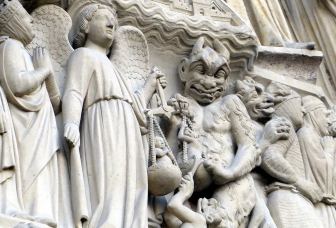 From the lessonTu penses que les gens sont naturellement bons ? 🤍 🖤Read the full dialogue
How it shows up
J'ai mal à la tête ce matin.
I have a headache this morning.
Il chante très mal, mais avec passion.
He sings very badly, but with passion.
C'est la lutte du bien contre le mal.
It's the struggle of good against evil.
Related expressions
Join 33,000+ readers learning French in months not years 🚀
Get a new real French dialogue every week. It's free and you can unsubscribe any time 👇
*Not suitable for absolute beginners
We respect your privacy. Unsubscribe at any time.